
Mr Hạnh Phúc Studio

How to Buy, Stake, and Manage Multi-Chain Crypto from Your Phone Without Losing Your Mind

Ever tapped “Buy” in a crypto app and then felt that tiny pit in your stomach? Whoa! Mobile wallets are slick, but the UX hides tradeoffs. My instinct said “this will be easy” the first dozen times I tried — and then somethin’ in the fee screen blinked red. Initially I thought that card purchases were all identical, but then I dug deeper and realized networks, on-ramps, and custody change everything.

Seriously? Card payments are fast. They also bring KYC, higher fees, and occasional limits based on region and card type. Most mobile wallets route card purchases through third-party providers who set rates and whitelists, not the wallet maker. On one hand that speeds onboarding; on the other, you give more personal info to middlemen, and that bugs me. I’m biased, but I prefer a wallet that lets me see the provider and estimate fees before I confirm.

Here’s the thing. Buying crypto with a card on a multi-chain wallet should be transparent. Many apps let you pick the chain when you buy — Ethereum, BNB Chain, Polygon — though actually the underlying purchase might arrive as USDT or ETH, and then the wallet swaps it for your token of choice. That swap costs gas and sometimes a cross-chain bridge fee, too, so the true cost can be higher than the card checkout suggests. On the bright side, some wallets bundle on-ramp choices and show effective final balances; that clarity matters when you’re on a tiny phone screen.

Hmm… how about staking? Staking feels like adulting in crypto. Short sentence. Staking can be simple or it can feel like juggling with one hand tied behind your back. You can stake directly in a wallet (non-custodial) or delegate through custodial services; each has tradeoffs in control, APY, and risk. Initially I thought higher APY always meant better, but then I realized that locked periods, slashing risk, and centralization risk can wipe out those gains.

Wow — liquid staking changed my view. Liquid staking tokens let you keep liquidity while earning rewards, though you trade direct validator control for tradability. Medium-term strategies often mix direct staking for stability and liquid staking for flexibility, because you sometimes want to move quickly when the market shifts. If you plan to stake on mobile, check reward compounding frequency, minimums, and whether the wallet shows historic validator performance. Also check whether rewards are auto-restaked — that little toggle can compound returns silently.

Okay, here’s a subtlety about multi-chain support: having many chains is great until you accidentally sign a swap on the wrong network. Short one. Wallets that support multiple chains must still manage approvals and token standards across EVM, Solana, and others, and those differences matter. For example, an ERC-20 approval on Ethereum is different from an SPL token approval on Solana; approvals behave differently and so does gas payment. I once moved tokens thinking I was on Polygon and then realized I had paid native ETH gas — not a fun morning.

On one hand, multi-chain wallets give freedom. On the other, they increase attack surface. Longer sentence alert: when a wallet supports many chains it must ship and maintain multiple signing modules and RPC endpoints, which increases complexity and the chance that a subtle bug or misconfigured RPC could expose users to errors or failed transactions at the worst possible moment. That complexity is why I value wallets that let me pin a preferred chain and that display native gas cost before I confirm every tx. Somethin’ as basic as a tiny gas preview saves stress.

Check this out — user experience matters more than fancy features when you use a phone. Short. Mobile screens hide nonce problems, pending transactions, and fee hikes, so a clear queued-tx view is priceless. Wallets that surface transaction speed options, estimated fiat costs, and a simple cancel/retry path reduce user anxiety. My practical rule: if I can’t see the final fiat figure on a small screen, I don’t hit confirm. It’s saved me very very expensive mistakes.

Phone screen showing a multi-chain wallet buy and stake flow

Practical checklist: Buy, Stake, and Manage Safely

Buy with card — check provider and fees. Seriously, read the little line that shows the on-ramp provider. Staking — check validator history, lockups, and slashing policy. Multi-chain — verify the active network and token standard before approving any transaction. If you want a wallet that bundles smooth on-ramps, staking interfaces, and honest multi-chain handling, try https://trustapp.at/ — it felt intuitive to me and handled a card purchase and a Polygon stake in one session.

Here’s what bugs me about some wallet flows: they hide important confirmations behind iconography. Short. A green check doesn’t explain who controls the private keys or what the lockup terms are. Be skeptical when a wallet promises “best rates” without showing the provider or the fee breakdown. On the flip side, some vendors go overboard with warnings and make common tasks frustrating — balance matters.

Security notes you can’t skip. Use a hardware wallet or seed phrase backup for substantial holdings. Keep small, active balances in a mobile wallet for trading and staking, and cold-store the rest. Enable biometric unlock where available; it stops casual phone snoops but doesn’t replace a robust seed backup. I tell people: think in layers — device security, app security, and network awareness — and then assume something will go wrong, so plan recovery steps.

There’s also tax and reporting reality. Short line. Buying, swapping, and staking generate taxable events in many jurisdictions, and mobile screenshots won’t be a long-term record. Use export tools, or pick a wallet that provides clear transaction history exports. That small extra effort saves headaches and potential penalties come tax season.

FAQ

Can I buy crypto with a debit or credit card directly inside a mobile wallet?

Yes, most modern mobile wallets offer card on-ramps via third-party providers; however, expect KYC, variable fees, and sometimes daily limits. Check which provider the wallet uses, the effective fee after any instant swap, and whether the wallet displays the final token and network you’ll receive. If you want fewer surprises, use providers that show the final fiat-equivalent and list the exact fees before you confirm.

Is staking from a mobile wallet safe?

It can be, if the wallet is non-custodial and you keep your seed safe, but risks include validator slashing, lockup periods, and potential app vulnerabilities. Evaluate validator performance, prefer well-known validators for critical balances, and consider splitting holdings: a portion in liquid-staking tokens and a portion directly staked for security and yield diversification.
Why I Switched to a DeFi Browser Wallet — and Why Rabby Kept My Attention

Whoa!
I messed up once and learned fast.
I used to treat browser wallets like another convenience tool—handy, but risky if you blinked.
Then one morning a pending approval ate a weekend trade and my gut said something felt off about how approvals worked across sites.
That was the nudge that made me actually pay attention to wallet UX and safety features, and, honestly, it changed how I interact with DeFi on desktop.

Really?
Yeah.
I started hunting for a wallet that balanced smoothness with protection.
Medium risk appetite, but not reckless—sound familiar?
On one hand I wanted one-click swaps; on the other, I wanted sane defaults that don’t approve everything forever, which is hilarious because that used to be standard.

Here’s the thing.
Most extensions look slick.
Many make promises that are thin on practical guardrails.
Initially I thought a flashy swap button was the main differentiator, but then realized transaction visibility, approval management, and clear confirmations are the real safety lifelines—those tiny UX details matter more than the bells and whistles.
So I started testing wallets, and Rabby kept turning up as one that actually addressed those core annoyances.

Whoa!
My instinct said: test with small amounts.
I did a few low-stakes trades and watched the approval flow and gas estimation closely.
Something stood out: the interface called out token approvals in a way that made me rethink blanket approvals that I had previously clicked through.
That shift from convenience-first to safety-first is what sold me.

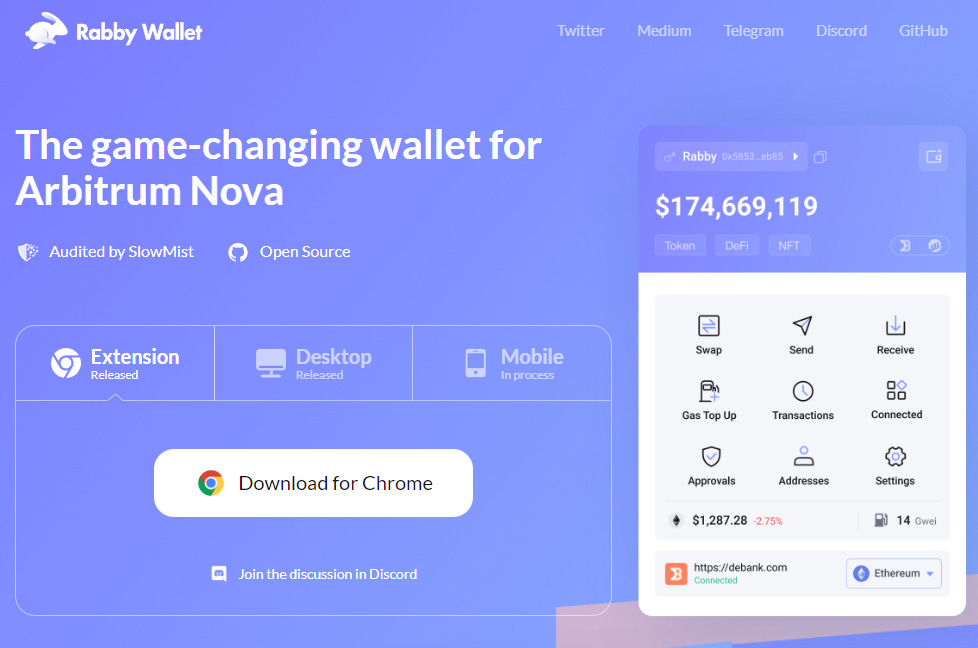
Rabby wallet interface mock showing approvals and network selector

What I Like About Using a Browser Extension Wallet for DeFi

Seriously?
It cuts friction.
Desktop trading sessions feel more deliberate.
I can have multiple tabs, compare prices, and then sign a single, explicit transaction when I’ve double-checked everything—no surprises in my phone notifications while walking the dog.
That deliberate flow matters because human attention is limited and mistakes compound quickly in DeFi markets.

Hmm…
Also, extension wallets let you mix speed with control.
You can keep a hardware wallet for big pots and a hot-extension for day-to-day stuff.
On the flip side, browser wallets historically had a rough patch with phishing and malicious sites, though—so the vendor’s approach to approvals and prompts is a dealbreaker.
I’m biased, but I prefer wallets that make approvals visible and revokable without having to dig deep into chain explorers.

Okay, so check this out—
Rabby offers a few features that feel purposely built for DeFi users not wanting to relearn their mistakes.
It gives clearer token approval controls and highlights when a dApp requests broad permissions.
When a dApp tries to set infinite approvals, Rabby surfaces that and gives you a simple way to limit scope—and honestly, that part stopped me from doing some very dumb things early on.
If you want to try it for yourself, you can get a quick rabby wallet download from their site and see the approvals UI firsthand.

Whoa!
There’s also transaction simulation in some builds (do check your version).
That simulation can show estimated token outcomes and potential slippage before you confirm, which is a lifesaver for complex swaps or permit flows that bundle multiple steps.
On the surface that’s just a user convenience, though actually it reduces cognitive load because you don’t have to mentally reconstruct multi-step transactions from raw calldata.
So the UX reduces error potential and that feels like a huge win, especially if you’re doing yield strategies across chains and don’t want to misread a router call.

Hmm…
I want to be clear—no wallet is perfect.
There are tradeoffs: more protective prompts can slow you down during a gas war, and extra confirmations add clicks.
On the other hand, those clicks are cheap insurance when something goes sideways and your tokens would otherwise be gone forever.
So I adjusted my behavior: save speed for likely safe trusted flows, and default to caution when interacting with new contracts.

Really?
I should say something about account organization.
Rabby supports multiple accounts and network switching without being confusing.
In practice that means I keep a “trading” account and a “staking” account separated—less chance of accidentally approving a contract from the wrong address, which is more common than people admit.
Small habit changes like that reduce risk in a very human way.

Here’s the thing.
Security-by-default features are more valuable than fancy analytics.
People love dashboards and token trackers.
Occasionally those dashboards hide the one click that grants a dApp infinite access, and that has bitten many.
A wallet that forces clarity about allowances and gives revoke tools upfront changes behavior; trust me, that behavioral nudge matters more than any single security spec on paper.

Practical Tips for Using a Browser Extension Wallet Securely

Whoa!
Always use a hardware wallet for large holdings.
Keep a small hot wallet for daily interactions and never mix large vault funds in the same account.
If a dApp requests unusual permissions, pause and research—open a fresh tab, check Discord or Twitter, and look for reports.
Do not trust a link somebody DMs you; phishing pages look increasingly legit and can mimic UI down to tiny details.

Hmm…
Set reasonable approval limits when possible.
Revoke allowances periodically—you can automate checks with third-party tools, though be careful which tools you authorize.
Use separate accounts for different strategies, and label them so you don’t forget which is which (oh, and by the way, naming your accounts helps).
Also, backup your seed phrase physically and never paste it into a website—ever.

Initially I thought seed phrases were enough, but then realized that UX errors and social engineering are actually the biggest threats for most people.
Actually, wait—let me rephrase that: technical compromise is rare for users who follow basic hygiene, while tricking the user into signing malicious transactions is far more common.
So the wallet’s job is not only cryptography but also making the decision context clear; that is, show me what I’m signing, and don’t hide approval details behind vague phrases.
Rabby’s approach to surfacing approvals and showing the actual contract calls helped me understand what to reject, which was an educational experience I didn’t expect from a wallet.

Seriously?
Another small habit: do a micro-test first.
Send 0.0001 ETH or 1 USDC to test a contract.
If that succeeds and the contract behaves as expected, then proceed with the full action.
Annoying? Yes.
Worth it? Definitely.

FAQ

Is a browser extension wallet safe enough for DeFi?

Short answer: for everyday trades, yes—if you follow good practices.
Longer answer: treat browser wallets like tools with clear roles.
Use hardware for large amounts, keep small balances in hot wallets, and choose a wallet that makes approvals transparent.
No single tool eliminates risk, but good UX and thoughtful defaults reduce human error a lot.

How do I limit token approvals?

Most modern wallets let you select a specific allowance rather than infinite approval.
When given the choice, set a minimal amount that still covers the transaction.
If the wallet doesn’t show that option, use a revoke or allowance-management tool—but verify that tool before connecting since those can be risky too.

Why choose Rabby over other extensions?

For me it was the mix of clear approval UI, sensible confirmation flows, and a design that nudges safer behavior.
On one hand, flashy features are tempting; on the other, subtle safety cues prevent catastrophic mistakes.
Rabby felt like a pragmatic middle ground—but your mileage may vary and you should evaluate it against your threat model.